Evaluating School Doodles Hand Drawings for Educational Design
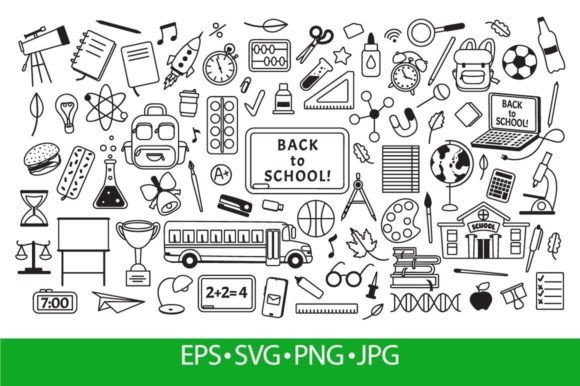
In the realm of educational graphic design and digital content creation, visual consistency plays a pivotal role in engaging young learners. School Doodles Hand Drawings represent a specific category of vector assets that capture the whimsical, informal aesthetic of classroom sketches. These collections typically feature hand-drawn kids education elements, including school supplies, stationery, books, laptops, and backpacks. For designers, educators, and content creators, understanding the utility and limitations of these assets is essential before integrating them into larger projects.
This article evaluates the practical applications of school doodle vector sets, examining their format versatility, design coherence, and suitability for elementary and secondary school contexts. By analyzing the tradeoffs between custom illustration and pre-made asset libraries, readers can determine whether these resources align with their specific creative goals.
Understanding the Aesthetic and Utility
The term "doodle" implies a casual, spontaneous style of drawing. However, when packaged as a professional resource, School Doodles Hand Drawings are carefully curated to maintain a cohesive visual language while retaining the charm of imperfection. These assets are designed to mimic the look of pencil or ink sketches, often featuring rough edges, varying line weights, and organic shapes. This aesthetic is particularly effective in educational materials because it feels approachable and less intimidating than polished, corporate-style graphics.
The primary value proposition of these vector sets lies in their thematic completeness. A typical collection includes a wide array of objects such as notebooks, pencils, erasers, globes, and digital devices like laptops and tablets. This variety allows creators to build comprehensive scenes without needing to source individual elements from disparate artists, which often results in stylistic clashes. The inclusion of both traditional stationery and modern technology reflects the hybrid nature of contemporary classrooms, making the assets relevant for a broad range of educational topics.
Format Versatility and Technical Considerations
One of the most critical factors in evaluating any graphic resource is file format compatibility. High-quality school doodle sets are typically distributed in multiple formats, including EPS, SVG, PNG, and JPEG. Each format serves a distinct purpose in the workflow of designers and educators.
- EPS and SVG: These vector formats are ideal for professional design work. They allow for infinite scalability without loss of quality, meaning a small icon of a pencil can be enlarged to poster size without becoming pixelated. SVGs are particularly useful for web-based educational platforms, as they can be styled with CSS and animated using JavaScript.
- PNG: Portable Network Graphics files usually come with transparent backgrounds. This makes them plug-and-play ready for presentation slides, worksheets, and social media graphics where layering images is necessary.
- JPEG: While less flexible due to the lack of transparency, JPEGs are universally compatible and have smaller file sizes, making them suitable for quick previews or email newsletters where bandwidth is a concern.
When selecting a set, users should verify that the vector files are well-organized. Poorly grouped layers in EPS or SVG files can make editing cumbersome. A well-structured set allows designers to easily change colors, adjust stroke widths, or isolate specific elements to create custom compositions.
Benefits for Educational Content Creation
For educators and instructional designers, time is often a scarce resource. Creating original illustrations from scratch requires significant artistic skill and hours of labor. Utilizing a pre-made School Doodles Hand Drawings set offers several tangible benefits:
- Consistency: Maintaining a uniform visual style across a curriculum or textbook is challenging when sourcing images individually. A single vector set ensures that all icons and illustrations share the same line weight, perspective, and artistic tone.
- Engagement: Hand-drawn elements tend to resonate well with younger audiences. The informal style can reduce cognitive load, making complex information feel more accessible and less rigid.
- Customizability: Unlike raster images, vector doodles can be recolored to match school branding or specific subject themes. For example, a science unit might use blue-toned doodles, while a history unit could utilize sepia tones, all derived from the same base assets.
Tradeoffs and Limitations
While convenient, relying on stock doodle sets is not without drawbacks. The most significant limitation is the lack of exclusivity. Popular vector sets may be used by thousands of other creators, potentially leading to visual fatigue among students who encounter the same icons across different platforms. Furthermore, the generic nature of these drawings means they may not accurately represent specific cultural contexts or specialized equipment required for advanced secondary education subjects.
Another consideration is the learning curve associated with vector editing. While PNG and JPEG files are easy to use, leveraging the full potential of EPS and SVG formats requires familiarity with software such as Adobe Illustrator, Inkscape, or Figma. Users without these skills may find themselves restricted to the default appearances of the images, limiting their creative flexibility.
When to Use School Doodle Sets
These assets are a strong fit for several specific scenarios:
- Early Childhood and Elementary Education: The playful nature of hand-drawn sketches aligns perfectly with the developmental stage of younger students.
- Teacher Resources and Worksheets: Quick decoration of handouts, quizzes, and classroom posters benefits from the rapid deployment of PNG assets.
- E-Learning Interfaces: SVG doodles can serve as intuitive icons for navigation menus, progress trackers, and interactive buttons in online courses.
- Marketing for Educational Products: Apps, tutoring services, and school supply brands often use this aesthetic to convey friendliness and approachability.
When to Consider Alternatives
There are situations where School Doodles Hand Drawings may not be the optimal choice. For higher education or professional training materials, a more minimalist or photographic style might convey the necessary seriousness and precision. Additionally, if a project requires highly specific diagrams—such as detailed anatomical drawings or complex chemical structures—generic doodle sets will likely fall short. In these cases, custom illustration or specialized scientific graphic libraries are more appropriate.
Furthermore, if brand identity is a strict priority, organizations may need to commission bespoke illustrations to ensure uniqueness. Stock vectors, even high-quality ones, cannot fully replicate a unique brand voice.
Making an Informed Decision
Choosing the right graphic resources involves balancing budget, time, and quality requirements. Before purchasing or downloading a School Doodles Hand Drawings set, evaluate the scope of your project. If you need a large volume of varied educational icons quickly and cost-effectively, a comprehensive vector set is an excellent investment. Ensure the package includes the formats you need, particularly SVGs for digital use and EPS for print.
Consider also the editing capabilities of your team. If no one on staff can manipulate vector paths, prioritize sets that offer a wide variety of pre-colored PNG options. Ultimately, these hand-drawn elements serve as tools to enhance communication. When used thoughtfully, they can transform dry educational content into engaging, visually appealing experiences that support learning objectives without distracting from them.
By understanding the strengths and limitations of these assets, creators can make strategic decisions that enhance their educational materials while maintaining professional standards and visual coherence.