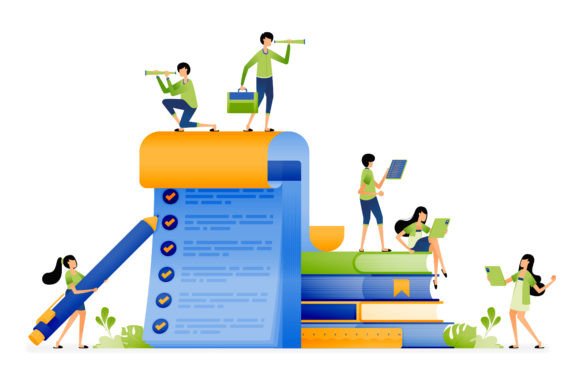
Exams and Assessments to Get Education: A Strategic Framework for Quality Learning
In the modern educational landscape, the conversation around Exams and Assessments to Get Education has shifted dramatically. No longer are these tools viewed merely as administrative hurdles or final judgments on a student’s memory capacity. Instead, they are increasingly recognized as vital diagnostic instruments that drive curriculum improvement, personalize learning pathways, and ensure that educational institutions deliver tangible value. For educators, administrators, and even parents, understanding the strategic design of assessments is not just about grading; it is about engineering better learning outcomes.
When we discuss Exams and Assessments to Get Education, we are referring to a comprehensive ecosystem of evaluation methods designed to measure knowledge acquisition, skill application, and critical thinking. The goal is not simply to pass or fail, but to gather data that informs instruction. High-quality learning environments rely on assessments that are aligned with clear educational objectives, providing feedback loops that benefit both the teacher and the learner. This approach transforms testing from a source of anxiety into a catalyst for growth.
Redefining the Purpose of Evaluation
The traditional model of education often treated exams as endpoints. A unit was taught, a test was given, and the cycle moved on regardless of the results. However, a more strategic approach views Exams and Assessments to Get Education as integral components of the learning process itself. Formative assessments, which occur during instruction, allow educators to identify gaps in understanding in real-time. This enables immediate intervention, ensuring that no student is left behind before the summative assessment arrives.
Consider the difference between a multiple-choice quiz designed to check factual recall and a project-based assessment requiring students to apply concepts to a real-world problem. The latter provides deeper insights into a student’s ability to synthesize information, collaborate, and innovate. By diversifying the types of assessments used, schools can create a more holistic picture of student capability. This diversity is essential for fostering higher-order thinking skills that are crucial in today’s workforce.
Furthermore, well-designed assessments support equity in education. When tests are biased toward specific cultural contexts or rely heavily on rote memorization, they disadvantage certain groups of students. Strategic assessment design involves rigorous review processes to ensure fairness and accessibility. This includes providing accommodations for students with disabilities and offering multiple modes of expression, such as oral presentations, written reports, or digital portfolios. The aim is to measure what students know and can do, not how well they can navigate a poorly constructed test.
Strategic Benefits for Institutions and Learners
Implementing a robust system of Exams and Assessments to Get Education yields significant long-term benefits for educational institutions. First, it enhances credibility. Schools that can demonstrate rigorous, fair, and effective assessment practices attract more students and retain higher levels of trust from parents and the community. Data derived from these assessments can be used to refine curricula, allocate resources more effectively, and provide professional development opportunities for teachers based on identified needs.
For learners, the benefits are equally profound. Clear assessment criteria help students understand expectations and take ownership of their learning journey. When assessments are transparent and aligned with learning goals, students can self-regulate their study habits more effectively. They learn to identify their own strengths and weaknesses, fostering a mindset of continuous improvement rather than fixed ability. This shift is critical for developing lifelong learners who are adaptable and resilient.
Moreover, high-quality assessments prepare students for the realities of the professional world. In many careers, performance is evaluated through projects, peer reviews, and practical demonstrations rather than standardized tests. By incorporating similar assessment methods in school, educators bridge the gap between academic theory and practical application. This alignment ensures that graduates are not only knowledgeable but also competent and confident in their abilities.
Design Principles for Effective Assessments
Creating effective Exams and Assessments to Get Education requires careful planning and adherence to several key design principles. The first principle is alignment. Every assessment item must directly relate to a specific learning objective. If an objective states that students will be able to analyze historical causes, the assessment should require analysis, not just identification of dates. Misalignment leads to invalid results and frustrates both teachers and students.
The second principle is validity. An assessment is valid if it measures what it claims to measure. This involves ensuring that the content is representative of the domain being tested and that the format does not introduce irrelevant difficulties. For example, a math test should assess mathematical reasoning, not reading comprehension, unless reading is part of the objective. Validity also requires ongoing review and revision based on student performance data.
Reliability is the third critical principle. A reliable assessment produces consistent results across different administrations and scorers. To achieve reliability, educators must use clear rubrics, standardize testing conditions, and train evaluators thoroughly. Digital platforms can enhance reliability by automating scoring for objective items and providing tools for consistent grading of subjective responses.
Finally, assessments should be actionable. The results should provide specific, constructive feedback that guides future learning. Simply assigning a grade is insufficient. Effective feedback highlights what the student did well, where they struggled, and how they can improve. This turns the assessment into a learning opportunity rather than just a judgment.
Navigating Risks and Common Pitfalls
While Exams and Assessments to Get Education are powerful tools, they carry risks if implemented without clear goals or context. One common pitfall is "teaching to the test," where instruction narrows to focus exclusively on tested content at the expense of broader learning experiences. This can stifle creativity and critical thinking, leading to superficial understanding. To avoid this, assessments should be varied and integrated into a broader curriculum that values exploration and inquiry.
Another risk is over-assessment. Students subjected to constant testing may experience burnout and anxiety, which negatively impacts performance and well-being. Educators must balance the need for data with the need for meaningful learning time. Not every lesson requires a formal assessment; sometimes, observation and informal questioning provide sufficient insight. Strategic planning involves determining the minimum amount of assessment needed to make informed decisions.
Bias is also a significant concern. Assessments can inadvertently favor certain demographics due to language complexity, cultural references, or assumed prior knowledge. Regular audits of assessment materials are necessary to identify and eliminate biased content. Involving diverse stakeholders in the review process can help ensure that assessments are inclusive and fair.
Integrating Technology and Visual Communication
In today’s digital age, the presentation and delivery of assessments are as important as their content. Visual clarity and user experience play a crucial role in reducing cognitive load and ensuring that students can focus on demonstrating their knowledge. This is where high-quality design resources become invaluable. For educators and institutions creating online assessments, mobile apps, or promotional materials for their programs, professional design elements enhance credibility and engagement.
Utilizing versatile design packages, such as editable EPS 10 files and high-resolution JPEGs, allows for seamless integration across various platforms. Whether you are designing banners for social media ads, posters for school events, or interfaces for mobile learning apps, consistent and professional visuals reinforce the brand identity of the educational institution. These assets can be customized to reflect the specific tone and values of the school, making communication more effective.
For marketers and administrators, these design tools facilitate better promotion of educational services. High-quality visuals capture attention in crowded digital spaces, driving enrollment and engagement. By using editable templates, teams can quickly adapt materials for different campaigns, saving time and resources while maintaining a polished appearance. This efficiency supports the broader goal of delivering high-quality education by freeing up staff to focus on pedagogical improvements rather than graphic design tasks.
Making Intentional Decisions for Long-Term Success
Ultimately, the success of Exams and Assessments to Get Education depends on intentional decision-making. Educators and leaders must ask themselves: What do we want to achieve? How will this assessment help us get there? Who will benefit from the data collected? By answering these questions strategically, schools can move beyond compliance and toward genuine improvement.
It is essential to view assessments as part of a larger ecosystem that includes curriculum, instruction, and professional development. Changes in one area should inform changes in others. For instance, if assessments reveal that students struggle with collaborative problem-solving, the curriculum might need to include more group projects, and teachers might need training in facilitating collaborative learning.
By approaching Exams and Assessments to Get Education with a strategic mindset, we can create learning environments that are not only rigorous but also supportive and equitable. This approach ensures that every student has the opportunity to succeed and that educational institutions fulfill their mission of preparing individuals for a complex and changing world. The investment in thoughtful assessment design pays dividends in the form of engaged learners, effective teachers, and stronger communities.