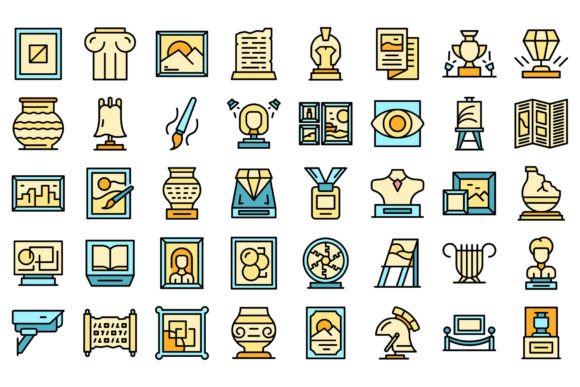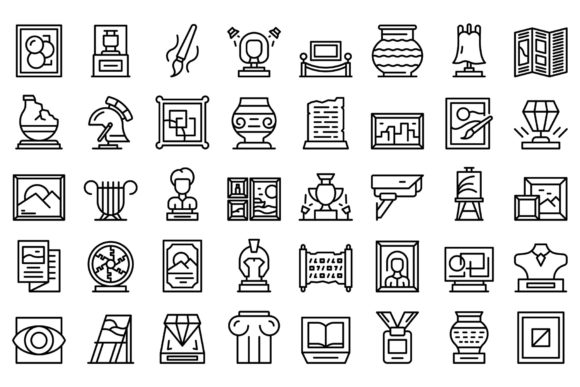
Art Gallery Icons Set Outline Vector Guide
Visual communication has become the backbone of modern digital interaction. Whether you are designing a website for a local museum, creating educational materials for a school history department, or building a brand identity for an art consultancy, the right graphical elements can make or break user engagement. This is where a specialized Art Gallery Icons Set Outline Vector becomes an indispensable asset in your creative toolkit. These icons are not merely decorative; they serve as functional signposts that guide users through complex information hierarchies with clarity and style.
The demand for high-quality, scalable graphics has never been higher. Professionals across various industries—from freelance web designers to corporate marketing teams—are constantly seeking resources that offer both aesthetic appeal and technical flexibility. An outline vector set dedicated to art galleries, museums, and educational halls provides exactly that. It bridges the gap between classical cultural institutions and modern digital interfaces, ensuring that the essence of art and education is preserved even in pixel-perfect formats.
Understanding the Value of Outline Vectors
When we talk about an Art Gallery Icons Set Outline Vector, we are referring to a collection of graphic symbols defined by mathematical paths rather than pixels. This distinction is crucial. Unlike raster images, which can become blurry or pixelated when resized, vectors remain crisp at any scale. This makes them ideal for responsive web design, where an icon might need to look sharp on a massive desktop monitor and equally clear on a small smartphone screen.
The "outline" style, characterized by clean lines and minimal fill, offers a contemporary look that fits seamlessly into modern UI/UX trends. It avoids visual clutter, allowing the content around the icons to breathe. For educators and museum curators, this means you can present information about exhibits, historical artifacts, or educational programs without overwhelming the viewer. The simplicity of the outline style ensures that the message remains the focal point, while the icons provide intuitive context.
Key Characteristics and Technical Flexibility
One of the most significant advantages of purchasing or downloading a comprehensive icon set is the variety of file formats provided. A robust Art Gallery Icons Set Outline Vector typically comes in multiple formats, including JPG, EPS, AI, PSD, and PNG. Each format serves a specific purpose in the workflow of creators and developers.
- AI and EPS: These are the native vector formats. They are essential for designers who need to edit the stroke width, change colors, or modify shapes directly in software like Adobe Illustrator. If you need to customize an icon to match a specific brand palette, these files are non-negotiable.
- PSD: Photoshop files are useful for designers who prefer working in a raster-based environment but still want the flexibility of layers. This format allows for easy integration into mockups and composite images.
- PNG: Portable Network Graphics are perfect for immediate use in web projects, presentations, or documents where transparency is required. They are ready to drag and drop, saving time for those who do not have advanced design skills.
- JPG: While less flexible due to the lack of transparency, JPGs are useful for quick previews or inclusion in printed brochures where file size and compatibility are primary concerns.
This multi-format approach ensures that whether you are a seasoned graphic designer or a teacher creating a PowerPoint presentation, you can utilize the assets effectively. The inclusion of AI files, mentioned twice in many product descriptions for emphasis, highlights the importance of editability in professional workflows.
Practical Applications Across Industries
The versatility of an Art Gallery Icons Set Outline Vector extends far beyond traditional art websites. Let’s explore how different professionals can leverage these assets to enhance their projects.
Education and Museums
For schools and museums, these icons are invaluable for creating engaging educational materials. Imagine a digital tour guide app for a school museum. Icons representing paintings, sculptures, historical artifacts, and audio guides can help students navigate the content intuitively. In classroom settings, teachers can use these visuals in worksheets, interactive whiteboard presentations, and online learning modules to make history and art lessons more visually appealing. The clean outline style ensures that printed handouts remain legible and professional.
Web Design and Development
Freelance web developers and agencies often struggle to find niche-specific icons that don’t look generic. An art gallery-themed set provides unique symbols for framing, palettes, easels, and exhibition spaces. These can be used in navigation menus, feature sections, and footers of portfolio websites, cultural event pages, or ticket booking platforms. Because they are vectors, they load quickly and scale perfectly, contributing to better site performance and SEO rankings.
Branding and Marketing
Entrepreneurs launching businesses related to arts and crafts, interior design, or cultural tourism can use these icons to strengthen their brand identity. Consistent use of themed icons across social media graphics, email newsletters, and business cards creates a cohesive visual language. For marketers, these icons can break up long blocks of text in blog posts about art trends or museum reviews, making the content more digestible and shareable.
Enhancing User Experience and Engagement
From a UX perspective, icons reduce cognitive load. Users process images faster than text. When a visitor sees an icon of a framed picture, they instantly understand it relates to an exhibition or gallery space. This immediate recognition improves navigation efficiency and keeps users engaged longer. Furthermore, the aesthetic quality of well-designed outline vectors adds a layer of professionalism and trustworthiness to your digital presence.
Consider the impact on mobile users. Small screens require clear, simple graphics. Bulky, detailed illustrations can become muddy on smaller displays. Outline vectors, with their clean lines and open spaces, remain distinct and recognizable even at small sizes. This responsiveness is critical for maintaining a high-quality user experience across all devices.
Selection and Implementation Tips
When choosing an Art Gallery Icons Set Outline Vector, consider the following practical advice to ensure you get the most value:
- Check Consistency: Ensure all icons in the set share the same stroke weight and corner radius. Inconsistent styles can look unprofessional and distract the user.
- Verify Editability: Open the AI or EPS files to confirm that paths are clean and grouped logically. This will save you hours of cleanup time if you need to make adjustments.
- Assess Variety: A good set should cover a broad range of relevant concepts, from basic tools like brushes and palettes to architectural elements like columns and arches typical of museum halls.
- License Compatibility: Always review the license agreement. Ensure it covers your intended use, whether commercial, personal, or educational, to avoid legal issues down the line.
In conclusion, integrating a high-quality Art Gallery Icons Set Outline Vector into your projects is a strategic move that enhances both form and function. By providing scalable, editable, and visually appealing graphics, these assets empower creators, educators, and businesses to communicate more effectively. Whether you are designing a sophisticated museum archive or a simple school project, the right icons can elevate your work, making it more accessible, engaging, and professional. Embrace the power of vector graphics to bring clarity and style to your visual storytelling.