Art Gallery Icons: Vector Flat Design
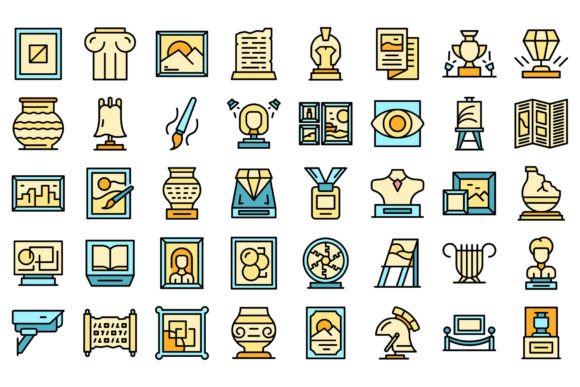
In the visual language of modern digital communication, clarity is king. Whether you are designing a website for a local museum, creating marketing materials for an art school, or building a brand identity for a creative agency, the icons you choose speak volumes before a single word is read. The Art Gallery Icons Set Vector Flat offers a streamlined, contemporary approach to visual storytelling that bridges the gap between aesthetic appeal and functional utility. This collection is not merely a set of graphics; it is a versatile toolkit designed for professionals who value precision, scalability, and clean design principles.
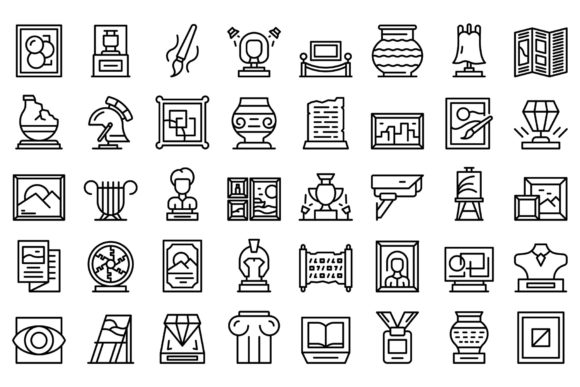
Unlike ornate or overly detailed illustrations that can clutter a layout, flat design strips away unnecessary textures, shadows, and gradients. What remains is a pure, geometric representation of concepts related to art, education, and culture. When paired with its counterpart, the art gallery icons set outline vector, designers gain a dual-layered resource that adapts seamlessly to various background colors and design densities. These assets are essential for anyone looking to convey sophistication without sacrificing load times or visual clarity.
The Visual Personality of Flat Iconography
The appeal of the Art Gallery Icons Set Vector Flat lies in its understated confidence. Flat design is often misunderstood as "simple," but in practice, it requires a rigorous attention to proportion and balance. Each icon in this set—whether depicting a paintbrush, a museum hall, or an easel—is crafted with consistent stroke weights and harmonious spacing. This consistency creates a cohesive visual rhythm that guides the user’s eye naturally across a page.
For brand strategists and marketers, this visual consistency is crucial. It reinforces brand identity by ensuring that every touchpoint, from mobile apps to printed brochures, feels part of the same family. The flat style exudes a modern, approachable vibe. It suggests that the institution or business it represents is current, accessible, and focused on content rather than decoration. This is particularly effective for educational institutions and schools, where the goal is to invite learning rather than intimidate with elitism.
Furthermore, the availability of these icons in multiple formats—including JPG, EPS, AI, PSD, and PNG—ensures that they are ready for any workflow. Vector formats like AI and EPS allow for infinite scalability without loss of quality, making them ideal for large-format prints such as banners for gallery openings. Meanwhile, PNGs with transparent backgrounds are perfect for quick integration into web designs and social media graphics.
Strategic Applications Across Creative Industries
The versatility of this icon set extends far beyond traditional gallery websites. Here is how different professionals can leverage these design assets to enhance their projects:
- Web and UI Design: In user interface design, speed and recognition are paramount. Flat icons load faster than complex illustrations and are easily recognizable at small sizes. Use them for navigation menus, feature highlights, or call-to-action buttons on cultural or educational platforms.
- Educational Materials: For schools and museums, these icons can break up text-heavy lesson plans or exhibition guides. An icon of a sculpture or a frame can serve as a visual anchor, helping students and visitors categorize information quickly.
- Print and Editorial Design: When working on magazines, catalogs, or annual reports, the outline version of the set can add a subtle, sophisticated texture to page layouts without overpowering the photography or typography.
- Social Media Graphics: Content creators need visuals that stand out in crowded feeds. The bold lines of flat icons work well against vibrant backgrounds, making them ideal for Instagram stories, Pinterest pins, or LinkedIn headers promoting art workshops or exhibitions.
By integrating these icons into your packaging design or promotional materials, you create a tactile connection with your audience. Imagine a tote bag sold at a museum gift shop featuring a minimalist line-art icon of a classical statue. It becomes a stylish accessory rather than just merchandise, extending your brand’s reach into the daily lives of your customers.
Enhancing Readability and User Engagement
One of the most significant advantages of using a well-crafted icon set is its impact on readability and visual hierarchy. In digital environments, users often scan content rather than reading it word-for-word. Icons act as signposts, allowing users to process information rapidly. A flat icon representing a "ticket" or "hours of operation" is understood instantly, reducing cognitive load and improving the overall user experience.
This efficiency directly influences audience engagement. When users can find what they need without friction, they are more likely to stay on your site longer, explore more pages, and convert into customers or donors. Moreover, consistent use of these icons contributes to a professional appearance. Sloppy or mismatched graphics can undermine trust, whereas a polished, unified icon set signals attention to detail and credibility.
Consider the role of these icons in logo design. While a full logo might require custom lettering, an icon from this set can serve as a recognizable mark for app icons, favicons, or social media profile pictures. Its simplicity ensures it remains legible even at tiny dimensions, a critical factor in today’s multi-device world.
Practical Guidance for Implementation
To get the most out of the Art Gallery Icons Set Vector Flat, consider these practical steps during your design process:
- Evaluate Project Fit: Before diving in, assess whether the flat aesthetic aligns with your brand’s voice. If your brand is vintage or highly ornamental, these modern icons might clash. However, they pair beautifully with sans serif font typefaces, creating a clean, contemporary look. If you need warmth, try pairing them with a gentle script font or a handwritten font for headings.
- Test Font Pairings: Icons do not exist in a vacuum. They interact with your typography. Ensure that the weight of the icon lines complements the weight of your chosen typeface. A heavy, bold icon might overwhelm a light, delicate serif font, while a thin outline icon might disappear next to a chunky display font.
- Review Included Styles: Take time to explore both the flat and outline versions. Use the flat versions for primary actions or highlighted features, and the outline versions for secondary information or decorative elements. This contrast helps establish a clear visual hierarchy.
- Check Licensing: Always verify the commercial licensing terms. Whether you are a freelancer working on a client project or a small business owner updating your website, ensure you have the right to use these commercial font and graphic assets in your specific context.
- Optimize for Performance: For web use, export your icons in SVG format when possible, as it offers the smallest file size and best scalability. If using PNGs, compress them appropriately to maintain fast load times without sacrificing clarity.
Ultimately, the Art Gallery Icons Set Vector Flat is more than a collection of images; it is a strategic asset for modern communicators. By understanding its visual characteristics and applying it thoughtfully across your web design, print, and branding efforts, you can create experiences that are not only beautiful but also intuitive and engaging. In a world saturated with visual noise, clarity is the ultimate luxury, and this icon set delivers it with precision and style.