Technology Kid Icon Vector Illustration: Enhancing Educational and Digital Design
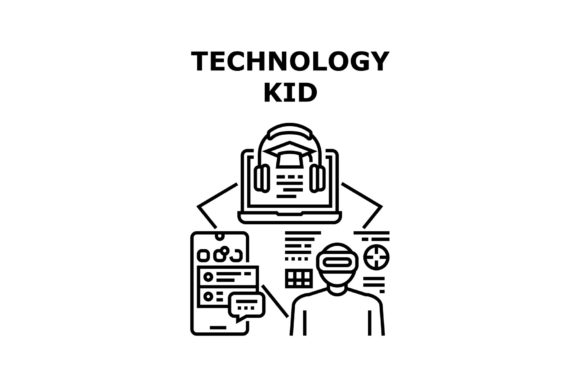
In the rapidly evolving landscape of digital design, visual communication plays a pivotal role in conveying complex ideas quickly and effectively. One specific asset that has gained significant traction among educators, marketers, and UI designers is the Technology Kid Icon Vector Illustration. This graphic element typically features a child engaged with modern technology—such as computers, tablets, or scientific equipment—rendered in a clean, scalable vector format. Often styled in black or monochrome for versatility, these illustrations serve as powerful symbols for themes ranging from STEM education to future-ready learning environments.
Understanding how to leverage this specific type of imagery can transform how organizations communicate their mission. Whether you are designing a website for an after-school coding club, creating marketing materials for a tech toy brand, or developing educational handouts, the right iconography bridges the gap between abstract concepts and user engagement. This article explores the practical applications, benefits, and implementation strategies for using technology-themed child illustrations in your projects.
Addressing the Need for Relatable Educational Imagery
Designers and content creators often face a common challenge: how to represent the intersection of childhood innocence and advanced technology without appearing cold or overly corporate. Traditional stock photography can sometimes feel staged or lack the stylistic consistency required for modern web design. Furthermore, photographic images do not always scale well across different devices, from large desktop monitors to small mobile screens.
The primary goal for many professionals is to find visuals that are both engaging and functional. They need assets that convey intelligence, curiosity, and progress. A technology kid science child illustration addresses this by humanizing technology. It suggests that tech skills are accessible, fun, and integral to modern upbringing. By using a vector concept, designers ensure that the image remains crisp at any size, solving the technical limitation of resolution loss associated with raster images like standard JPGs.
Why Vector Formats Matter for Versatility
When selecting digital assets, the file format is just as critical as the subject matter. The Technology Kid Icon Vector Illustration is typically available in formats such as EPS (Encapsulated PostScript) and JPG (Joint Photographic Experts Group). Understanding the distinction between these formats is essential for optimal implementation.
- EPS Files: These are vector-based, meaning they use mathematical equations to define shapes rather than pixels. This allows designers to resize the illustration infinitely without any loss of quality. For professional print materials, large banners, or responsive web elements, EPS is the superior choice. It also allows for easy color customization, enabling brands to match the icon to their specific palette.
- JPG Files: These are raster images, composed of a fixed grid of pixels. While they cannot be scaled up without becoming pixelated, JPGs are universally compatible and ready to use immediately. They are ideal for quick web uploads, social media posts, or documents where editing capabilities are not required.
Having access to both formats provides flexibility. A designer might use the EPS file to create a custom-colored header for a website and then export a lightweight JPG for a blog post thumbnail. This dual-format availability ensures that the computer school children imagery can be deployed across various platforms seamlessly.
Practical Applications in Education and Marketing
The utility of a Technology Kid Icon Vector Illustration extends far beyond mere decoration. It serves as a visual anchor for several key industries. Here are some practical scenarios where these icons add significant value:
STEM and Coding Programs
Educational institutions offering science, technology, engineering, and mathematics programs need to appeal to both students and parents. An illustration depicting a child interacting with a computer or conducting a science experiment instantly communicates the program's focus. It reassures parents that the environment is educational while signaling to children that the content is engaging. Using a space education vector concept can further enhance this by suggesting exploration and limitless potential.
EdTech User Interfaces
In app design, clarity is paramount. Icons help users navigate interfaces quickly. A black illustration of a child using a tablet can serve as an intuitive button for "Student Mode" or "Learning Resources." Because vector icons are lightweight, they contribute to faster load times, improving the overall user experience. The simplicity of a black-and-white design ensures that the icon does not clash with other UI elements, maintaining a clean and professional aesthetic.
Corporate Social Responsibility (CSR) Reports
Companies investing in community education initiatives often publish CSR reports to highlight their contributions. Including high-quality vector illustrations of children benefiting from technology donations or training programs adds an emotional layer to the data. It transforms dry statistics into a narrative about empowerment and future growth.
Tailoring the Approach for Different Users
Different stakeholders will approach the Technology Kid Icon Vector Illustration with unique priorities. Recognizing these differences helps in selecting the right asset for the right context.
Graphic Designers prioritize editability and scalability. They will likely prefer the EPS format, allowing them to adjust stroke weights, change colors, or integrate the icon into larger compositions. For them, the "black illustration" base is a canvas for customization.
Teachers and Educators often need quick, ready-to-use resources. They may favor JPG files that can be directly inserted into PowerPoint presentations, worksheets, or newsletters. For this group, the relevance of the image—such as a science child holding a beaker or looking through a telescope—is more important than technical editability.
Marketers focus on brand alignment and conversion. They look for illustrations that evoke positive emotions and align with their brand voice. A marketer might choose a more dynamic pose for the child in the illustration to convey energy and innovation, using the image in email headers or landing pages to drive engagement.
Best Practices for Implementation
To maximize the impact of your Technology Kid Icon Vector Illustration, consider the following recommendations:
- Maintain Consistency: If you use one style of icon, ensure all other icons on your platform match in line weight and complexity. Mixing detailed vectors with simple flat icons can create visual dissonance.
- Optimize for Accessibility: When using these icons on the web, always include descriptive alt text. For example, describe the image as "Child using a laptop for online learning" rather than just "icon." This ensures screen readers can interpret the content for visually impaired users.
- Contextual Relevance: Choose illustrations that accurately reflect the activity. If the content is about astronomy, use a space education vector concept with stars or planets. If it is about coding, ensure the child is depicted with a computer or code snippets. Misaligned imagery can confuse the audience.
- Color Psychology: While black illustrations are versatile, consider adding accent colors that align with psychological triggers. Blue often represents trust and technology, while green can signify growth and learning. Use the vector format to test different color combinations easily.
Conclusion
The Technology Kid Icon Vector Illustration is more than just a decorative element; it is a strategic tool for communication. By combining the scalability of vector graphics with the relatable subject matter of children engaging with technology, designers and educators can create compelling narratives that resonate with diverse audiences. Whether used in a classroom setting, a digital app, or a marketing campaign, these illustrations help demystify technology and promote a positive view of digital literacy. By understanding the technical advantages of EPS and JPG formats and applying best practices for integration, professionals can enhance their visual storytelling and achieve better engagement outcomes.