Unlocking the Atomic Age: A Deep Dive into the Manhattan Project
The Second World War was a conflict defined by industrial might, strategic ingenuity, and terrifying technological leaps. Among these advancements, none casts a longer shadow over modern history than the development of nuclear weapons. For educators, students, and history enthusiasts seeking to understand this pivotal moment, World War II Part 13 - the Manhattan Project serves as an essential resource. This comprehensive presentation breaks down the complex scientific, political, and military factors that converged to create the atomic bomb, offering a clear window into one of the most significant chapters of human history.
Understanding the Manhattan Project is not merely about memorizing dates or names; it is about grasping how a secret race for survival transformed global geopolitics forever. Whether you are teaching a high school history class, leading a university seminar, or engaging in self-directed learning at home, having access to thoroughly researched material is crucial. The World War II Part 13 - The Manhattan Project PowerPoint presentation provides exactly that—a structured, visual, and informative guide that simplifies dense historical data without sacrificing accuracy or depth.
The Race Against Time and Physics
To truly appreciate the magnitude of the Manhattan Project, one must first understand the context of fear and urgency that drove it. In the early 1940s, Allied scientists were terrified that Nazi Germany was already developing an atomic weapon. This fear spurred the United States, with support from the United Kingdom and Canada, to launch a top-secret research and development undertaking. The goal was singular and absolute: build a functional nuclear bomb before the Axis powers could.
This section of history is often misunderstood as purely a scientific endeavor. In reality, it was a massive industrial and logistical operation. It required the construction of entire cities from scratch, such as Oak Ridge, Tennessee, and Hanford, Washington, to produce the necessary fissile materials. The World War II Part 13 - the Manhattan Project presentation highlights these logistical marvels, showing how the project mobilized hundreds of thousands of workers, many of whom did not even know what they were building. This aspect is particularly valuable for students studying the home front efforts during WWII, illustrating how total war extended into the realm of theoretical physics.
Key Figures and Scientific Breakthroughs
No discussion of the atomic bomb is complete without mentioning the brilliant minds behind it. J. Robert Oppenheimer, often called the "father of the atomic bomb," led the Los Alamos Laboratory in New Mexico. Alongside him were giants of physics like Enrico Fermi, Niels Bohr, and Richard Feynman. However, the narrative is not just about genius; it is about collaboration under extreme pressure.
The presentation includes detailed slides on these key figures, providing context for their contributions and their later moral reflections. For higher education students, this offers a rich ground for discussing the ethical responsibilities of scientists. The visual format, with one to three pictures on every slide, helps humanize these historical figures, moving them beyond textbook names into real people grappling with unprecedented power. This approach makes the content suitable for adult education and homeschool environments where critical thinking and ethical debate are encouraged.
From Theory to Trinity: The First Test
The culmination of years of secret work arrived on July 16, 1945, in the desert of New Mexico. The Trinity test marked the first detonation of a nuclear weapon. The explosion yielded energy equivalent to approximately 20 kilotons of TNT, shocking even the scientists who had calculated the probabilities. The success of the Trinity test changed everything. It proved that the theoretical models were correct and that the weapon was ready for use.
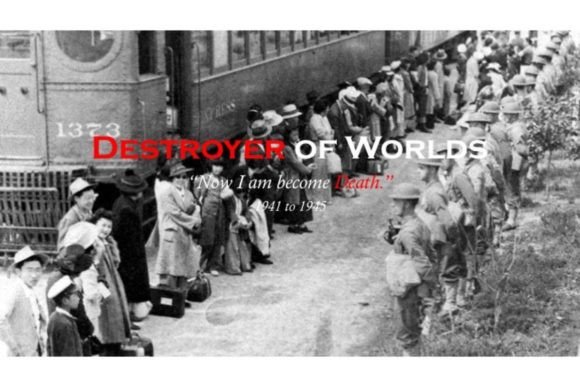
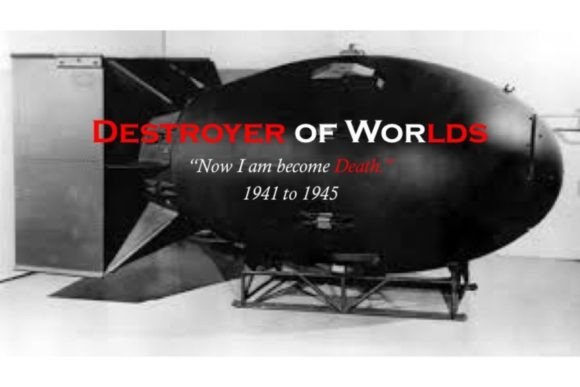
In World War II Part 13 - The Manhattan Project, this event is depicted with clarity and impact. The slides detail the immediate aftermath of the test, including Oppenheimer’s famous quote referencing the Bhagavad Gita: "Now I am become Death, the destroyer of worlds." This moment is critical for understanding the psychological shift that occurred among the project’s leaders. For teachers, this section provides a powerful hook for discussions on the moral implications of warfare and the dawn of the nuclear age. The thorough research ensures that the details provided are accurate, saving educators the time of cross-referencing multiple sources.
Strategic Deployment and the End of the War
With the successful test in hand, the focus shifted to deployment. The decision to use atomic bombs against Japan remains one of the most debated topics in military history. The presentation covers the selection of targets, the preparation of the bombs "Little Boy" and "Fat Man," and the eventual missions over Hiroshima and Nagasaki in August 1945.
It is important to note that this resource does not shy away from the devastating human cost of these attacks. By presenting the facts clearly and respectfully, it allows learners to form their own informed opinions. The slides explore the immediate effects of the bombings, the subsequent surrender of Japan, and the end of World War II. This balanced approach is ideal for high school classes, where students are beginning to engage with complex historical causality and moral ambiguity. The visual aids help illustrate the scale of destruction, making the abstract concept of nuclear yield tangible and sobering.
Educational Value and Practical Application
Why choose a PowerPoint presentation over a textbook chapter? The answer lies in engagement and efficiency. Modern students are visual learners. They respond better to curated images, concise bullet points, and structured narratives than to walls of text. The World War II Part 13 - the Manhattan Project file, formatted as a PPTX, is designed for flexibility. Teachers can use it as-is for a lecture, or they can modify it to suit specific lesson plans. Homeschool parents can use it as a backbone for a week-long unit on WWII technology.
The presentation spans 78 pages, ensuring comprehensive coverage without overwhelming the audience. Each slide is crafted to maintain attention, with relevant imagery that supports the textual content. This is particularly useful for lecturers who need to keep large audiences engaged. The research has already been done, allowing the instructor to focus on delivery and discussion rather than fact-checking. This saves hours of preparation time, a practical benefit that cannot be overstated for busy educators.
Integrating History into Modern Workflows
Beyond the classroom, understanding the Manhattan Project has relevance in today’s world. We live in an era where nuclear proliferation remains a key geopolitical concern. By studying the origins of nuclear weapons, students and adults alike can better understand current international relations, non-proliferation treaties, and the ongoing debates about nuclear energy. The skills developed through analyzing this historical event—critical thinking, source evaluation, and ethical reasoning—are transferable to many modern workflows and industries.
For those in project management or engineering, the Manhattan Project offers a case study in managing massive, multi-disciplinary teams under tight deadlines and high secrecy. The organizational challenges faced by General Leslie Groves and J. Robert Oppenheimer provide lessons in leadership and communication that are still applicable today. Thus, this presentation is not just for history buffs; it is a valuable tool for anyone interested in the intersection of science, policy, and management.
Conclusion: A Resource for Lifelong Learning
The legacy of the Manhattan Project is complex, fraught with both scientific achievement and moral dilemma. To teach or learn about it effectively requires a resource that is both accurate and accessible. World War II Part 13 - The Manhattan Project meets this need by providing a well-researched, visually engaging, and comprehensive overview of the topic. Whether you are a teacher looking to enhance your curriculum, a student aiming to deepen your understanding, or an adult learner exploring the depths of world history, this presentation offers significant value.
By breaking down the technical, political, and human elements of the atomic bomb’s creation, it fosters a deeper appreciation for the complexities of the Second World War. It encourages viewers to look beyond the simple narrative of victory and defeat, prompting them to consider the long-term consequences of technological innovation in warfare. In a world that continues to grapple with the implications of nuclear power, understanding its origins is more important than ever. This PowerPoint serves as a reliable, efficient, and insightful guide through one of history’s most critical turning points.