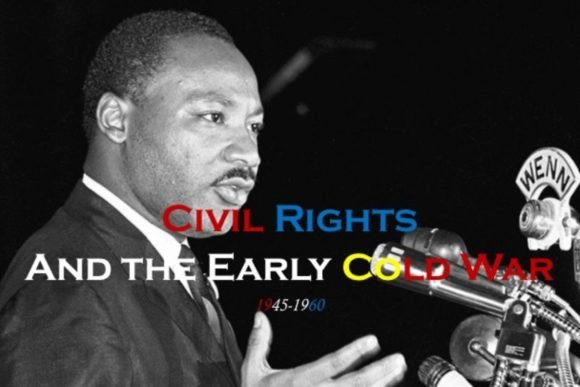
Civil Rights & Early Cold War History
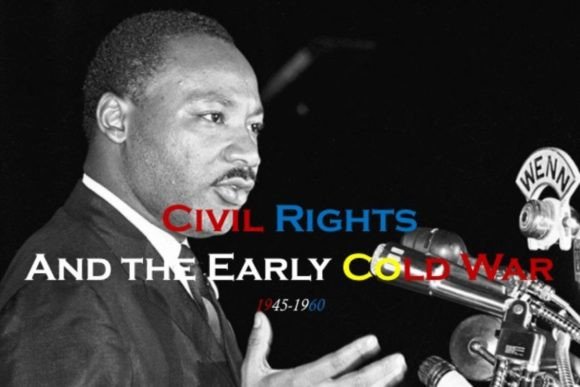
The period between 1945 and 1960 represents one of the most complex and transformative eras in American history. It was a time defined by stark contrasts: unprecedented economic prosperity sat alongside deep-seated racial injustice, while the promise of democratic freedom clashed with the paranoia of nuclear annihilation. For educators, content creators, and history enthusiasts, navigating this dual narrative requires resources that are not only accurate but also engaging. Civil Rights and the Early Cold War Parts I II offers a comprehensive solution, providing a thoroughly researched PowerPoint presentation that dissects these critical years with clarity and depth.
This resource is more than a simple timeline of events. It is a curated educational tool designed for high school classes, higher education lectures, adult learning environments, and homeschool curricula. With 225 pages of content, it bridges the gap between dry academic texts and dynamic visual storytelling, making it an invaluable asset for anyone looking to teach or learn about the foundations of modern America.
Deconstructing the Postwar Paradox
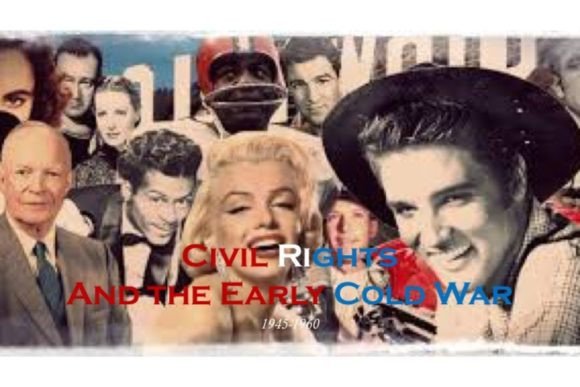
Understanding this era requires grappling with its inherent contradictions. The presentation begins by exploring The Postwar Boom, a chapter that illustrates how returning veterans and industrial shifts created a middle-class explosion. However, this economic golden age was not equally distributed. By juxtaposing images of suburban expansion with the realities of segregated housing, the material highlights the structural inequalities that fueled the emerging Civil Rights movement.
For teachers and lecturers, this approach is crucial. It moves beyond rote memorization of dates and encourages critical thinking about cause and effect. The slides do not just state that civil rights activism grew; they show how the hypocrisy of fighting fascism abroad while maintaining Jim Crow at home created a moral imperative for change. This narrative thread is essential for students to understand why the 1950s were not merely a "quiet" decade before the storm of the 1960s, but a period of intense foundational struggle.
Visual Storytelling for Complex Histories
One of the standout features of Civil Rights and the Early Cold War Parts I II is its visual structure. Each slide contains one to three carefully selected images, ensuring that the audience remains engaged without being overwhelmed by text-heavy screens. In an age where attention spans are short, this design choice is practical and effective. It allows educators to use the images as primary sources, prompting discussions about propaganda, media representation, and cultural norms.
Consider the chapter on Hysteria. Instead of simply listing the activities of the House Un-American Activities Committee, the presentation uses period photography and political cartoons to illustrate the climate of fear. This visual evidence helps learners grasp the emotional texture of the era. For bloggers and digital creators, this format serves as an excellent model for how to present dense historical information in a digestible, shareable format. The balance of text and imagery ensures that the core message remains clear and impactful.
Navigating Fear and Foreign Policy
The specter of nuclear war loomed large over every aspect of life in the late 1940s and 1950s. The chapters titled The Specter of the Apocalypse and The Korean War provide a nuanced look at how foreign policy influenced domestic life. The presentation explains how the need to present a unified front against communism often suppressed dissent and slowed progress on civil rights. Yet, it also shows how African American leaders leveraged Cold War rhetoric, arguing that racial discrimination undermined America’s credibility on the world stage.
This intersection of international relations and domestic policy is a sophisticated topic that can be difficult to teach. The resource breaks it down into manageable segments, offering clear explanations and relevant examples. For adult education groups or book clubs, these sections provide rich ground for discussion. Participants can explore how global tensions shape local policies, a theme that remains remarkably relevant today. The presentation does not shy away from the complexities, offering a balanced view that respects the intelligence of the audience.
Reevaluating the "Golden Decade"
Popular culture often romanticizes the 1950s as a time of stability and traditional values. The chapter Golden Decade Or Dullsville challenges this nostalgia. It examines the conformist pressures of the era, the rigid gender roles, and the underlying anxieties that permeated society. By presenting both the comforts of consumer culture and the stifling nature of social expectations, the material invites a more critical assessment of the period.
For writers and marketers, this section offers insights into how cultural narratives are constructed. It demonstrates how the same set of facts can be framed as either a golden age or a period of stagnation, depending on the perspective. Understanding these framing techniques is useful for anyone creating content about historical trends or analyzing current cultural moments. The presentation provides the evidence needed to support a more nuanced viewpoint, avoiding simplistic generalizations.
Planting the Seeds of Change
The final chapter, Seeds of the Sixties, connects the events of the early Cold War to the explosive social movements of the following decade. It shows how the legal victories, organizational strategies, and youthful disillusionment of the 1950s laid the groundwork for the Civil Rights Act and the anti-war protests of the 1960s. This continuity is vital for understanding American history as a flowing narrative rather than a series of isolated incidents.
Educators can use this section to help students draw connections between past and present. It encourages them to look for the roots of contemporary issues in historical contexts. For homeschool parents, this provides a structured way to discuss long-term social change, helping younger learners see the impact of individual and collective action over time.
Practical Applications for Diverse Audiences
The versatility of Civil Rights and the Early Cold War Parts I II makes it suitable for a wide range of users. Here are several ways to adapt this resource:
- High School Teachers: Use the slides as a backbone for lecture units, supplementing with primary source documents and class debates. The visual elements can serve as prompts for document-based questions.
- University Lecturers: Assign specific chapters as pre-reading or viewing for seminar discussions. The thorough research saves preparation time, allowing instructors to focus on facilitating deeper analysis.
- Content Creators: Draw inspiration from the structure and visual layout for your own historical videos or blog posts. Note how complex topics are broken down into digestible chunks.
- Homeschool Families: Use the presentation as a central text for a unit study on mid-20th-century America. The clear organization makes it easy to plan lessons around specific themes.
To keep results effective and organized, users should tailor the depth of discussion to their specific audience. For younger students, focus on the narrative arcs and key figures. For adult learners, delve into the geopolitical implications and socioeconomic data provided in the slides. The PPTX format allows for easy customization, enabling you to add local examples or additional media to enhance relevance.
Conclusion
History is not just about the past; it is a tool for understanding the present. Civil Rights and the Early Cold War Parts I II provides a robust, well-researched, and visually engaging framework for exploring a pivotal era in American life. By combining rigorous historical analysis with accessible design, it empowers educators and learners to uncover the complexities of the post-WWII world. Whether you are teaching a classroom, leading a workshop, or satisfying personal curiosity, this resource offers the clarity and depth needed to make sense of a time that continues to shape our world today.